Ever wonder why toddlers seem to pick up languages faster than a cat chasing a laser pointer? Language acquisition, like fine cheese, indeed matures with age, but there’s a catch. The so-called ‘critical age’ for learning languages could be the magic key to becoming a polyglot, or just a decent conversationalist in another tongue. In this text, we’ll jump into the fascinating realm of language development, revealing why timing can mean everything when it comes to mastering new languages. Buckle up and let’s crack the code.
Understanding Language Acquisition
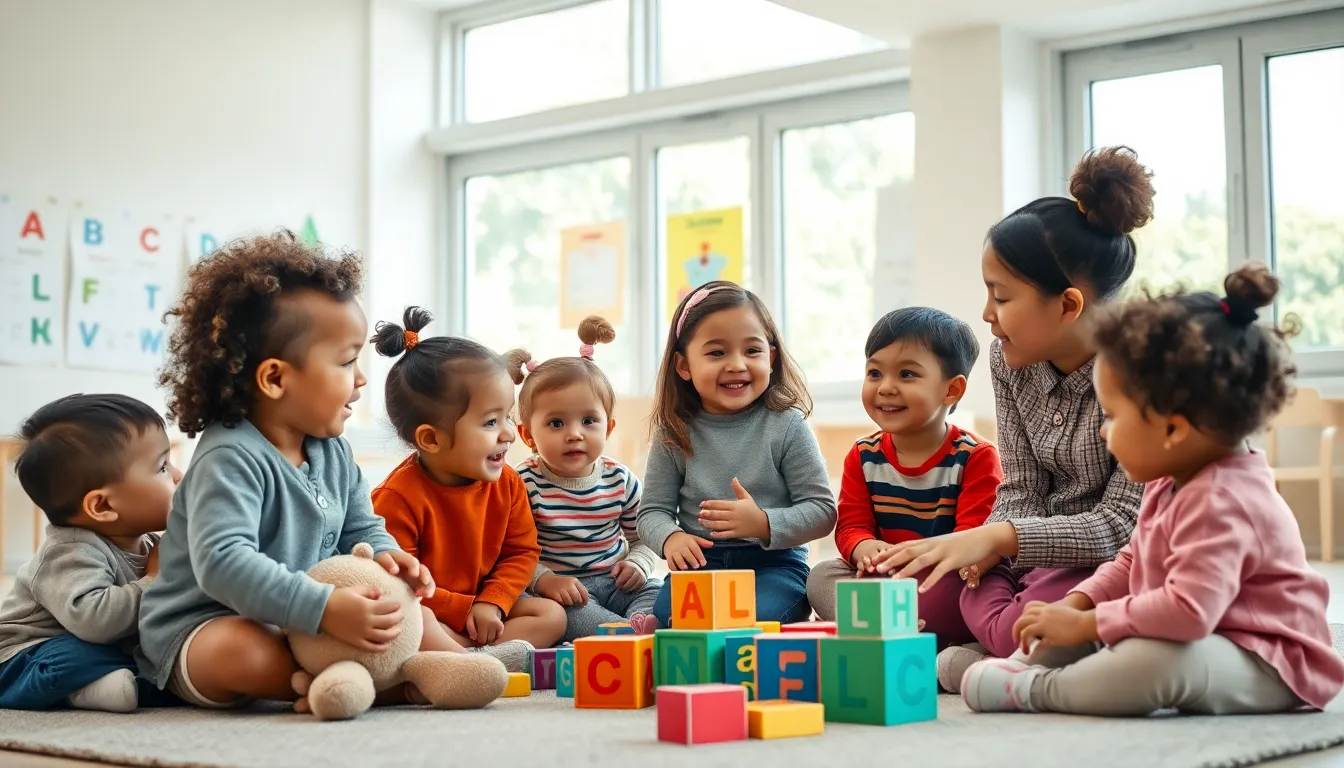
Language acquisition is the remarkable process through which humans learn to understand and communicate using language. It begins almost from the moment they are born and continues into their early years. Children, especially those in their formative stages, are like language sponges. They effortlessly absorb sounds, words, and structures from their environment.
Interestingly, this absorption isn’t purely passive. They actively engage with their caregivers, mimicking sounds and experimenting with their vocal cords. While many adults wrestle with conjugating verbs, children frolic in the playground of phonetics and semantics with seemingly little effort. The surrounding social context reinforces this learning, enabling them to develop strong linguistic foundations.
But, it’s crucial to note that not all children are identical in their language acquisition journey. Individual differences such as personality, environment, and even the number of spoken languages within a household significantly shape their learning curve.
The Critical Period Hypothesis
The Critical Period Hypothesis (CPH) posits that there exists a window of time during which language acquisition occurs with greater ease. This period typically spans from birth up until puberty, suggesting that after this phase, picking up a new language becomes significantly more challenging.
Several studies support the CPH, indicating that children who start learning a language before age five tend to achieve greater fluency than those who begin later. The brain is particularly malleable during this time, equipped to form neural connections that help language skills. After puberty, the brain’s plasticity is reduced, making it harder to learn new languages.
Researchers often back this hypothesis with examples of feral children who missed this critical period, indicating that early exposure to language is not merely beneficial, it could be essential. This raises important questions about educational strategies and global communication: are we truly tapping into our potential for language learning?
Factors Influencing Language Learning
While the age of a learner is a significant factor, several other elements play a part in effective language acquisition. Each one can create a unique learning experience.
Implications of the Critical Age Theory
The implications of the critical age theory are vast, affecting language education policies and teaching methodologies. For parents and educators, understanding this phenomenon can lead to more informed decisions about early language exposure.
Language Learning in Early Childhood
In early childhood, nurturing environments thrive on interaction. Engaging with children through songs, games, and conversation sets them on a course for success. Such experiences contribute to developing superior accents and grammatical intuition, making language learning an exciting journey rather than a chore.
Challenges and Misconceptions
Even though the growing body of research on language acquisition, many misconceptions persist. Some believe that older learners cannot achieve fluency or that they are bound to have a noticeable accent. In reality, achieving fluency later in life is entirely possible, albeit requiring more effort.
Another common myth is that immersion alone guarantees success. While immersion is a vital component, other factors, such as motivation, social interaction, and emotional support, significantly influence the outcome of language learning journeys. Understanding these nuances can empower learners, encouraging them to embrace their linguistic quests regardless of their age.
Strategies for Effective Language Learning
Effective language learning, especially for older learners grappling with the critical age hypothesis, involves intentional strategies. Here are some recommendations:
- Start with daily practice: Consistency reigns supreme. Engaging in a little bit of language practice every day adds up over time, making a substantial impact.
- Seek social interaction: Relationships drive language learning. Whether conversing with native speakers or participating in language exchange programs, social nuances enhance vocabulary acquisition and pronunciation.
- Use technology: With apps and programs designed for every age, learners should leverage resources that fit their needs. Online courses and language learning platforms are invaluable, allowing self-paced and user-friendly experiences.
- Leverage media: Watching films, listening to music, or reading books in the target language stimulates learning. It nurtures comprehension skills while making the process enjoyable.